Let me give you an example:
Every week, at my workplace (a publicly traded company), someone
writes a Bible verse on a public white board in the main hallway. This
is allowed and accepted, despite laws separating the workplace and
religion.
If I were to express the offense I feel** at seeing
this, I would be ridiculed and ostracized. If I wrote on that same white
board--not obfuscating the Bible verse--a verse from some text I
happened to believe in, it would likely be erased, or if not, quite a
row would result.
This is because Christianity is the 'popular'
choice here (where I live and work), and people are too ignorant to accept that different points
of view and beliefs exist. "Not Christian" is equivalent to "Evil" in
their small minds.
The point is: It's hard to express a
non-popular opinion. At our American core, we all say we support free
speech, but it's very hard to accept (or support or defend) the speech of those with whom we
disagree, especially when it rubs us to an emotional rawness. Most are
not intelligent or cognizant enough to understand, let alone embrace and realize, the distinction, or the importance that the distinction
exist in the first place.
So what's the message? If you find
yourself offended, angry, in a sense of outrage, etc., can you be big
enough to view the situation objectively and be true to the principles?
**This is for discussion only. I actually take no offense at others
expressing their religious viewpoints; I DO take offense at those
attempting to force their viewpoints on me, or those who would demean my
expression of my religious viewpoints.
Friday, May 15, 2015

Friday, January 30, 2015
New (to me) sporty car: 2009 Mazda MX-5 Miata
Picked up a very gently used, cherry 2009 Miata the other week. Bone stock, and a perfect platform for modification and upgrades.
To take it on the track, a roll bar is needed, so that will happen shortly. In the meantime, a few aesthetic & creature comfort things:
1. Stubby antenna from CravenSpeed. $20, and already looks better. Easy peasy!
2. Aluminum pedals from GoMiata. They arrived with minimal hardware (as in three bolts, three nuts and a hex wrench) and sans instructions, despite the listing on their web site, "Complete 4 Piece Set with all hardware and detailed instructions included." I've emailed them and we'll see what they say.
3. Adding a hidden garage door opener. I bought a spare OEM switch cover, and an electrical engineer friend has mapped out the circuit so the opener will get the right voltage and only work when the car is powered on.
4. AeroCatch locking hood latches. Might install these this weekend, if I have the time. Requires cutting the OEM hood, which is scary at first, but not a big deal if planned very carefully.
To take it on the track, a roll bar is needed, so that will happen shortly. In the meantime, a few aesthetic & creature comfort things:
1. Stubby antenna from CravenSpeed. $20, and already looks better. Easy peasy!
2. Aluminum pedals from GoMiata. They arrived with minimal hardware (as in three bolts, three nuts and a hex wrench) and sans instructions, despite the listing on their web site, "Complete 4 Piece Set with all hardware and detailed instructions included." I've emailed them and we'll see what they say.
3. Adding a hidden garage door opener. I bought a spare OEM switch cover, and an electrical engineer friend has mapped out the circuit so the opener will get the right voltage and only work when the car is powered on.
4. AeroCatch locking hood latches. Might install these this weekend, if I have the time. Requires cutting the OEM hood, which is scary at first, but not a big deal if planned very carefully.
Complete
4 Piece Set with all hardware and detailed instruction included - See
more at: http://www.gomiata.com/20srpalpe.html#sthash.rHTcGbxi.dpuf
Complete
4 Piece Set with all hardware and detailed instruction included - See
more at: http://www.gomiata.com/20srpalpe.html#sthash.rHTcGbxi.dpuf
Complete
4 Piece Set with all hardware and detailed instruction included - See
more at: http://www.gomiata.com/20srpalpe.html#sthash.rHTcGbxi.dpuf
Complete
4 Piece Set with all hardware and detailed instruction included. - See
more at: http://www.gomiata.com/20srpalpe.html#sthash.rHTcGbxi.dpuf
Saturday, September 27, 2014
Canon FD Lens Testing with the Panasonic GH4
The DMC-GH4 is one fun little camera. And it is little! It's smaller than even the Canon T3i I bought several years ago.
I've been experimenting with Canon FD glass for a few years, as it's cheap (by comparison), and designed to work with film 35mm cameras (anyone remember the Canon AE-1?).
There seem to be three quality levels out there; the most common (on eBay and other places) are the inexpensive range. You can find 28mm, 35mm, 50mm and 85mm lenses typically around $15 or so. These are not the fastest lenses, with max apertures in the f/3.5 range.
Next step up are the more expensive FD lenses, but not yet in the L-series. These will be $100-$300, and offer a great value for the money, with max apertures in the f/1.4 to f/2 range.
The top step are the Canon L-series. These are more rare and a lot more expensive, and I've found very few of them available in the US. Lots in Japan, though.
I've bought into the mid-level, and my favorite three are 50mm f/1.4, 35mm f/2 and 28mm f/2.
I found these on eBay for $40, $199 and $185, respectively. Combined with the $399 Metabones Speed Booster, this is one handy little filmmaking kit!
The Speed Booster Effect
First example is the dramatic effect of the Speed Booster. I set up this shot with it:
Then removed the Speed Booster, keeping all other lens and camera settings identical:
The 0.71 'crop factor' and the one-stop light gain of the Speed Booster are obvious, don't you think?
FD Lens Sharpness
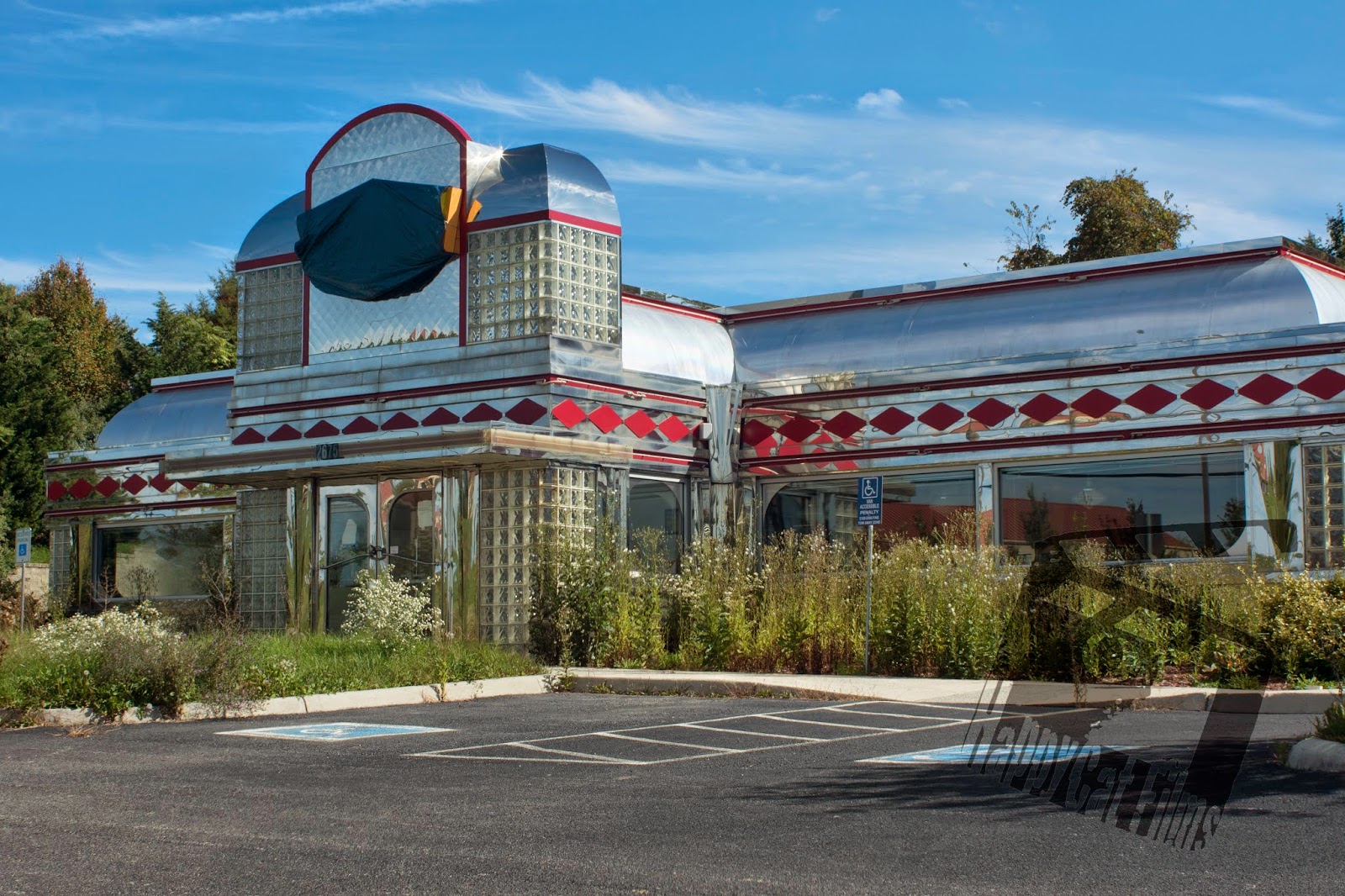
Next step was to look at lens sharpness. Again, these lenses were designed for a full 35mm film frame, so they should resolve 4K and cover the GH4's Micro Four-Thirds sensor with no problem at all. And they do. As with most lenses (certainly in this price range), they are somewhat soft at extremes of the aperture range. See for yourself. Focus in each case was on the corner just above and to the right of the main entrance door, and a variable ND filter was used to keep a balanced exposure.
Overall, this lens looks good, especially for the price! No vignetting, plenty of sharpness across the entire image, good color. I did notice a slight color shift in the sky introduced by the variable ND, but it's not significant on this lens (on the 50mm it was downright nasty).
Now, consider the focal point at each aperture setting. For these I zoomed in on each of the images above.
Results
Worth the price? Definitely! Okay for 4K? Definitely.
Let me know what questions you have, or other specific tests you'd like to see.
Happy Shooting!
- Rob.
I've been experimenting with Canon FD glass for a few years, as it's cheap (by comparison), and designed to work with film 35mm cameras (anyone remember the Canon AE-1?).
There seem to be three quality levels out there; the most common (on eBay and other places) are the inexpensive range. You can find 28mm, 35mm, 50mm and 85mm lenses typically around $15 or so. These are not the fastest lenses, with max apertures in the f/3.5 range.
Next step up are the more expensive FD lenses, but not yet in the L-series. These will be $100-$300, and offer a great value for the money, with max apertures in the f/1.4 to f/2 range.
The top step are the Canon L-series. These are more rare and a lot more expensive, and I've found very few of them available in the US. Lots in Japan, though.
I've bought into the mid-level, and my favorite three are 50mm f/1.4, 35mm f/2 and 28mm f/2.
I found these on eBay for $40, $199 and $185, respectively. Combined with the $399 Metabones Speed Booster, this is one handy little filmmaking kit!
The Speed Booster Effect
First example is the dramatic effect of the Speed Booster. I set up this shot with it:
 |
| GH4, Canon FD 50mm f/16 with Speed Booster |
Then removed the Speed Booster, keeping all other lens and camera settings identical:
 |
| GH4, Canon FD 50mm f/16 with non-Speed Booster adapter |
The 0.71 'crop factor' and the one-stop light gain of the Speed Booster are obvious, don't you think?
FD Lens Sharpness
Next step was to look at lens sharpness. Again, these lenses were designed for a full 35mm film frame, so they should resolve 4K and cover the GH4's Micro Four-Thirds sensor with no problem at all. And they do. As with most lenses (certainly in this price range), they are somewhat soft at extremes of the aperture range. See for yourself. Focus in each case was on the corner just above and to the right of the main entrance door, and a variable ND filter was used to keep a balanced exposure.
 |
| FD 28mm f/2 |
 |
| FD 28mm f/4 |
 |
| FD 28mm f/8 |
 |
| FD 28mm f/16 |
 |
| FD 28mm f/22 |
Now, consider the focal point at each aperture setting. For these I zoomed in on each of the images above.
 |
| f/2. Unacceptably soft. |
 |
| f/4. Usable. |
 |
| f/8. Still looks good. Greater depth of field. |
 |
| f/16. Starts to soften again. |
 |
| f/22. Not as bad as wide open, but soft. |
Worth the price? Definitely! Okay for 4K? Definitely.
Let me know what questions you have, or other specific tests you'd like to see.
Happy Shooting!
- Rob.
Sunday, November 3, 2013
SnapFocus from Midas Mount - First Impressions
-->


I just received my SnapFocus late last
week. I had fulfillment number 40, if that info helps anyone else waiting.
First impressions are mixed. The build quality is good, not
great. The rack and pinion housing seems well-built, but is mounted atop two
ugly, unfinished stamped-metal pieces that form the slide for positioning the
drive gear against your lens gear, and they’re held in place by a single ¼-20
screw that you adjust by hand (I’d recommend against really cranking on this
one, as it will mar the pieces forming the slide). Other than the slide, all
the components are nicely black anodized. The rail mount is from SmallRig, with
their logo on the locking handles.
Mounting it up presents some challenges if your lens has
larger-diameter sections near the focus gear (e.g. a Rokinon Cine 14mm).
Raising the camera farther above the 15mm rods helps a lot.
The bicycle levers are pretty simple, and mounted up very
easily on my Redrock Micro handles (by removing the grips and attaching the
bicycle handles to the core rod). The drive gear is natural-colored plastic and
looks to be 3D-printed.
The rack and pinion system is capable of about 4 inches of
rack travel, but (and this is my biggest beef with the unit right now), the
bicycle levers only allow about 1 inch of that travel – severely limiting the range
of lens focus throw you can use. The drive gear rotates about 90 degrees maximum, which
is WAY too short to use the full focus of most lenses.

Yes, I know drive gear rotation doesn’t correlate 1:1
to lens focus throw, but the bottom line is the same: The SnapFocus only uses a
very short range of the focus throw of the lens. I have some cine lenses with
200 degrees of throw, and with the SnapFocus I can use very little of it.
The limitation is the short pull radius of the bicycle
levers – it’s about 1 inch. As the lever travels, the net cable travel lessens
even further as the cable stretches between two points of the arc –
geometrically forming a segment rather than a sector (yes, I’m an engineer).

To me, this is a very significant shortcoming of the system,
and I’m eager to hear from others who have received their units and had time to
play with them. Short of completely changing the bicycle levers (to ones with
more pull) or rigging a planetary gear, I’m puzzling over how to get the full
linear travel of the rack to get the most focus pull range from the SnapFocus.
Sunday, August 25, 2013
Why I'm Through with Digital Juice
I have spent thousands of dollars over
the past several years with Digital Juice. My studio shelves are overflowing
with DJ’s software products. I have gear bags and reflectors and lights and
C-stands and flags and greenscreens and more from them, and I like and use this
gear regularly. In fact HERE’S my list, copied from their site.
However, I think I’m done buying from
Digital Juice. I’ve gone from being a strong advocate for them to recommending
against them. The reasons are many, gradual and intertwined.
Point Number One: Devolving Content
Early on (c. 2006), Digital Juice
offered wonderful tutorials and videos about filmmaking, with several great
contributors, like Perry Jenkins, D. Eric Franks, Jeff Earley and Chuck Peters.
(These great episodes are (as of this writing) still available at
digitaljuice.com/djtv. You should check them out while they’re still
available.) Even Rick Green was worth watching. Their videos since have shifted
to tutorials for their products (nothing wrong with that) and purely
promotional pieces. (And don’t get me started on Trevor Haugen.)
Point Number Two: The Juicer
A long-time beef of mine with Digital
Juice has been over the Juicer. Nearly all their software products are designed
to work through the Juicer, and some even require it (e.g. DJ Fonts). The
Juicer has always been the weakest link in their offering. It’s slow,
cumbersome and temperamental, with an outdated interface that doesn’t comply with
convention. It could have been a wonderful, all-encompassing tool for managing
digital content, but DJ didn’t develop it to that point. Instead, they kept it
proprietary and limited. (I asked repeatedly for the ability to add my own
keywords, to no avail.)
Point Number Three: Iffy Customer
Relations
My experiences with DJ’s customer
service have been outstandingly positive and questionable. There seems to be no
middle ground. In one case, a Fresnel lens cracked on one of my DJ Helios
lights. I inquired if the standard Arri sizes were a direct replacement. DJ
replied without answering my question, but offered to replace the broken lens,
and made good on that offer. In another case, a software product (on DVD)
didn’t work due to obvious, visible defects in the DVD’s manufacture. DJ
refused to help as it had been more than 30 days since the purchase date.
Silly me for buying a multi-disc, post-production graphical
software product that I didn’t use and fully test for functionality within 30
days.
Point Number Four: Pricing Practices
Twice, I’ve purchased Digital Juice
products shortly after their introductions, at ‘early adopter’ pricing, only to
find the prices reduced about a week later. This drove me to never buy a DJ
product upon its first introduction. Though this one bit me twice I will say that DJ stepped up and granted
refunds for the difference each time. Only once I asked.
Point Number Five: Degrading Quality
over Time
I bought four C-stands when they offered
the chrome, solid version; they then changed it to black, with inferior
hardware. I bought LED lights when they offered them from Prompter People; then
they re-packaged it with a plastic housing (vs. aluminum). On the media content
side, the early products from DJ (JuiceDrops, StackTraxx, etc.) were packaged
in sturdy, rigid covers that continue to hold up well over time. They switched
to very flimsy packaging originating in India (based on the little paper flags
that fall on the floor when you open their products). I have continued to
wonder where their products are developed and produced; in supporting Digital
Juice, based in Florida, have I been sending my money overseas?
Point Number Six: I’m Stuck
DJ’s license agreement prohibits anyone
from re-selling the media products purchased from them, even if it’s the
original physical product. This is quite different than the music world, for
example, where you can buy and sell used CDs, DVDs, etc. so long as you’re not
selling illegal copies. DJ’s license agreement means I can’t sell the original
packaged product I bought from them, despite it being of no use to me any more.
They’re within their rights here, but that doesn’t mean I have to be happy
about it. Even if I have a duplicate, I can’t sell the duplicate.
Point Number Seven: Outright Thievery?
The latest product offering is “Drag
& Drop,” and is very, very similar to products offered over the past few
years by Rampant Design Tools. Scary similar. To make matters worse, when I
(and others) posted politely and factually about this on DJ's forum, they
deleted the posts. For a company to be so insecure that they can’t tolerate discussion of their competitors’ products is sad; for that company to
delete legitimate, non-critical posts comparing their competitor’s products is
community-destroying.
No one of the above points was enough to prompt me to
action. Taken together, however, they are. I’m moving on. My Digital Juice
buying days are over.
Saturday, April 23, 2011
What to Charge - An Experience
Hey everyone;
I want to share a bit of philosophy about video-for-hire work, or videography. Videography is different than filmmaking. Filmmaking is art; videography is a business. A customer is buying a product and/or service from you, the videographer. That product has costs associated it with it, and you deserve to make money from it.
A recent experience highlights the difference between reality and perception regarding the cost of videography. It started with a note on a mailing list (note that names have been changed throughout, but the details of the job are as accurate as I can convey them) on a Thursday evening:
I am a member of a student organization, the Students Want Video society. We are organizing an event, SWV day 2011 on the XXth of Month (next Tuesday) from 5.30 pm to 9.45 pm, at the Big Hotel. We wanted to have video coverage for the event. I was wondering if you would be interested in doing it.
We do have some money allocated for this purpose, so we can pay you as well. However we have no expertise in any kind of video editing or video coverage. So we would like to hand it over to one person who could be in charge for the entire video, which will go up in youtube.
You can find more details about the SWV day event from our website : www.blahblahblah.com. Do let me know if you would be interested in taking up the job. We can negotiate the money involved as well.
Best,
Student Leader
I spoke to Student Leader about the job. It was a 4.5 hour conference with 100 attendees, with A) presentations to happen for the first hour, then B) break-out sessions where participants will prepare posters, followed by C) presentations of those posters to the group, and concluding with D) final remarks by the organizers. He wanted to capture the components A, C and D in their entirety, with a montage of activity from the break-out sessions. He wanted this edited and produced for display on the organization’s web site and on YouTube. Note that he was looking for someone to do this five days from when he sent the inquiry.
To properly capture this event would require a minimum staff of three: Two camera operators and an audio/grip.
One camera could be fixed on the stage and/or presenter, with a second to roam and capture b-roll footage. Given, one active cameraperson could do both, but the scale of the project really needs two. To accurately capture the stage presentations would require the fixed camera be operated, as presenters tend to move about. Normally, I'd want separate audio and grip workers, but for this job could likely get away combining the role.
To estimate what to charge for this job, I used the following: 4.5 hour job, plus 1 hour of setup and 30 minutes of cleanup; 15 hours of editing. (Note that a fully-edited piece requires about 1 hour editing per minute of finished video. As the customer wanted ‘let the camera roll’ footage for much of this event, the 2-hour video product would not require such intense editing.) I value labor as follows:
Camera operator: $50/hour
Audio operator: $25/hour
Grip: $15/hour
Editing: $100/hour
If these rates seem high, consider this: They are ‘charge-out’ rates the business charges to find, provide, organize and manage the skilled resources. These are not unskilled, minimum-wage jobs.
So, six hours on-site at a combined $125/hour (2 cameras plus audio) is $750. Plus 15 hours of editing for $1500, with a total ‘cost’ of $2250, not including travel time, meals, media costs, depreciation on equipment, etc. These are very real costs to a business.
Therefore, I estimated the job at $3,500. The customer choked. He was thinking ‘a few hundred dollars at the most.’ The quoted price is at a gross margin of only 36%. This is a bare minimum to most businesses in order to be successful. Many businesses strive for 50% or even 60% gross margin. The food service business scrapes by with about 33% margins (ask anyone who owns a restaurant about how rich they’re not).
The bottom line is this: Before jumping at a videography job because ‘a few hundred dollars’ sounds reasonable, do the math. Nothing is more valuable than your time, especially with your skills applied during that time. You deserve to be paid a fair rate for the work and product delivered.
As always, your mileage may vary. Happy Shooting!
-Rob.
Tuesday, June 29, 2010
The Blacksburg Photography Club
June 29, 2010. Blacksburg, Virginia.
Just got back from the June monthly meeting of the Blacksburg Photography Club (www.blacksburgphoto.org). I will admit I went into it with some hesitation, for a few learned reasons.
First, I'm a video guy more than a photographer, though (I rationalize to myself because it's true) the foundations of good film/video are the same as in photography: Lighting, composition, exposure, etc. all matter tremendously to both branches of the art.
Second, I've done my share of 'users groups' and 'peer review groups' and generally have a distaste for groups that do nothing but cheer each other on with no focus on true individual artistic development. While I'm very much in favor of hobbyists and non-professionals networking and collaborating, my opinion is the work product must be considered against the best professional work of the day. If one only compares one's self to the other amateurs around, one will not progress.
Fortunately, I was very pleasantly surprised. My fears were unfounded, and I look forward to more such gatherings!
The guest speaker was Jeremy Jackson, a Light Painter from Floyd (www.tackyshack.net). While not a professional presenter, Jeremy made a very engaging and interesting presentation, highlighting the evolution and many of the fun, simple tricks of light painting. Nearly everyone in the room had their phones or cameras out to try it, and the 'box of toys' Jeremy shared was quite entertaining. I have to do some experimenting.
The photos presented by members (the club holds a peer-judged competition every month around a theme as well as an 'open' category) were really very good. A group of like-minded enthusiasts they may be, but a group worth checking out. Highly recommended.
The discussion about presented photos got me thinking about moving pictures, particularly in regard to color. Much of the discussion was around the colors captured in the photo and how they were achieved. In film and video, color is much more than 'pretty;' it is a key component to the emotion and story of the film. Color can set the tone or give the audience insight or create an emotional response all by itself.
I'm not necessarily going to rush out and start trying to perfect my still frame craft, but when I do take stills, I'm going to think much more about what the color does to tell the story I have in mind for the image...
Happy shooting!
- Rob.
Just got back from the June monthly meeting of the Blacksburg Photography Club (www.blacksburgphoto.org). I will admit I went into it with some hesitation, for a few learned reasons.
First, I'm a video guy more than a photographer, though (I rationalize to myself because it's true) the foundations of good film/video are the same as in photography: Lighting, composition, exposure, etc. all matter tremendously to both branches of the art.
Second, I've done my share of 'users groups' and 'peer review groups' and generally have a distaste for groups that do nothing but cheer each other on with no focus on true individual artistic development. While I'm very much in favor of hobbyists and non-professionals networking and collaborating, my opinion is the work product must be considered against the best professional work of the day. If one only compares one's self to the other amateurs around, one will not progress.
Fortunately, I was very pleasantly surprised. My fears were unfounded, and I look forward to more such gatherings!
The guest speaker was Jeremy Jackson, a Light Painter from Floyd (www.tackyshack.net). While not a professional presenter, Jeremy made a very engaging and interesting presentation, highlighting the evolution and many of the fun, simple tricks of light painting. Nearly everyone in the room had their phones or cameras out to try it, and the 'box of toys' Jeremy shared was quite entertaining. I have to do some experimenting.
The photos presented by members (the club holds a peer-judged competition every month around a theme as well as an 'open' category) were really very good. A group of like-minded enthusiasts they may be, but a group worth checking out. Highly recommended.
The discussion about presented photos got me thinking about moving pictures, particularly in regard to color. Much of the discussion was around the colors captured in the photo and how they were achieved. In film and video, color is much more than 'pretty;' it is a key component to the emotion and story of the film. Color can set the tone or give the audience insight or create an emotional response all by itself.
I'm not necessarily going to rush out and start trying to perfect my still frame craft, but when I do take stills, I'm going to think much more about what the color does to tell the story I have in mind for the image...
Happy shooting!
- Rob.
Subscribe to:
Posts (Atom)